2.4 trillion parameters in open weights: the frontier model left the data center
Three weeks that changed the math
August 2026 packed a run of releases that, taken together, shift the capability frontier less than they shift its geography:
- August 3 — Qwen3.8-Max, at 2.4 trillion parameters, became generally available. It is the largest open-weight release ever made.
- August 13 — Google shipped Gemini 3.7 Flash, only three weeks after 3.6 Flash. On the DeepSWE v1.1 coding benchmark it jumped from 49.0% to 65.3%; on FrontierCode 1.1, from 34.4% to 43.6%.
- August 14 — the Qwen team opened the weights of Qwen3.8-27B, a dense multimodal model built explicitly to run on a high-end workstation, not a data center.
- And Meta returned to open-weight territory with the Muse family.
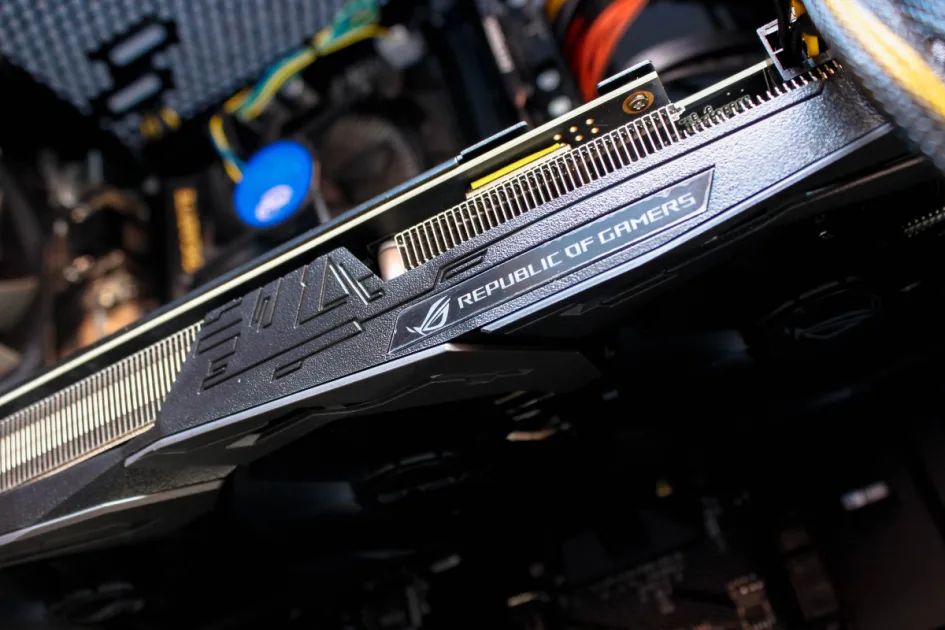
The easy headline is the benchmark fight. The useful headline is different: a capable multimodal model now fits under your desk.
What changes when the model runs wherever you want
Three practical consequences, ordered by impact for anyone building business systems:
1. Data that cannot leave the company now has a real option. Law firms, clinics, insurers, financial services, payroll. Until now, the AI conversation in those contexts ended at "we cannot send this to an API." There is now a technical answer instead of a request for a legal exception.
2. Cost changes shape. Per-token billing is variable and scales with usage; owned hardware is a fixed cost that scales with peak. For high, predictable, repetitive load — classifying ten thousand documents a day, extracting fields from invoices, routing tickets — a local model usually wins the math within months. For sporadic use, the API remains unbeatable.
3. The version stops changing underneath you. A hosted model is updated by the vendor. That is excellent until the day behavior shifts and your production prompts stop producing the same result, with no commit of yours involved. Downloaded weights are frozen weights — and reproducibility is a requirement, not a luxury, in anything auditable.
Where the smaller model is enough (and where it is not)
Worth resisting the excitement: 27 billion parameters are not 2.4 trillion. The honest ruler:
Where a workstation model does well: classification, structured extraction from documents, routing, summarization, embeddings, first drafts, translation, normalizing messy data.
Where it still disappoints: long multi-step reasoning, complex code in a large codebase, autonomous agents with many tools, tasks requiring deep and specific world knowledge.
The design that works in practice is hybrid: local model for volume, frontier model for the hard parts. Most of the work in a real system is volume.
The message hidden in the cadence
Three weeks between two versions of the same model tier is not a calendar detail. It is an architecture warning.
If your code calls a provider's SDK straight from the middle of your business logic, every model swap becomes a refactor. If there is a thin layer in between — your own interface, or a provider-agnostic abstraction like the one Laravel now ships natively — swapping models becomes a config change plus a comparison test.
At this release pace, the ability to switch is worth more than the current choice.
What to do this week
Ignore the leaderboard for thirty minutes and run the test that matters: take fifty real examples from your own data — documents, tickets, messages, whatever it is — and run them through the open model that would fit your infrastructure. Compare against what you use today on three axes: did it get it right, what did it cost, how long did it take.
If the local model gets 90% of what the API gets at half the cost, you do not need to wait for the next version of anything. The decision is already made.
Related posts
The junior role did not vanish because of AI — it vanished because the on-ramp got automated
Entry-level engineering postings fell 67%, and at big tech juniors went from 32% to 7% of...
The ghost model that "crushed" GPT-5.6 — and the statistics lesson that came with it
An ownerless model appeared on OpenRouter, scored 80% on a coding benchmark, and made head...
You did not get 4x faster. You got 10x less secure — and now there is data
Nearly half of AI-generated code is born with an OWASP Top 10 flaw. Commits ship 4x faster...