The Campo Largo UFOs: what technology reveals about what appeared in the sky
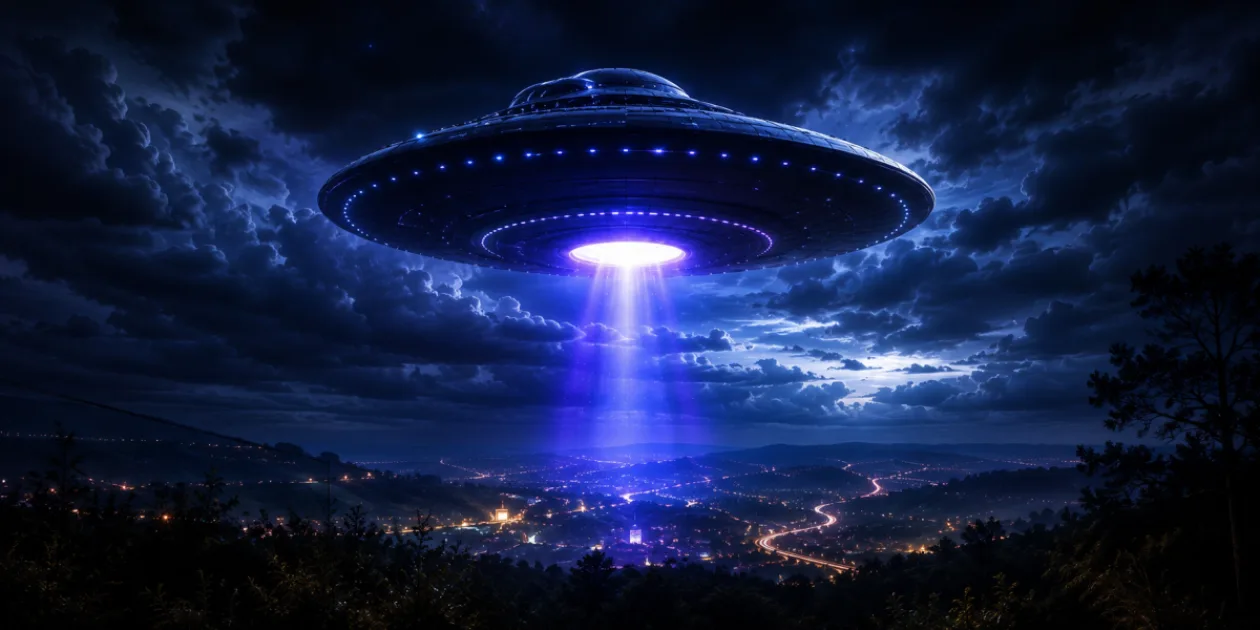
Lights in the sky, questions on the ground
Every now and then a small town makes the news because someone filmed strange lights in the sky. Campo Largo joined that list, and the internet did what it always does: split between people who swore they saw a craft and people who swore it was a drone, a satellite, or a reflection.
The curious part is that the debate almost always ignores the one thing that could settle it: technology. Not the technology of the imagined craft — the technology we already have to measure, record, and analyze whatever shows up in the sky.
This post is not about whether to believe in UFOs. It is about a skill that applies to lights in the sky and to any business decision: separating signal from noise using the right tools.
What a real signal leaves behind
A physical object in the sky does not vanish without a trace. It interacts with the world, and every interaction is a data source:
- Radar. Airports and air traffic control record anything with meaningful size and speed. A real flying object usually appears on more than one radar, from different angles.
- Cameras with metadata. A phone video carries time, location, and device model. Cross that with the position of the sun, the moon, and known satellites and a lot of mysteries dissolve in minutes.
- Triangulation. If three people in different spots filmed the same light, you can compute altitude and trajectory. One witness is anecdote; three geolocated witnesses are geometry.
Notice the pattern: the doubt is not resolved by conviction, it is resolved by data that cross-checks. When several independent sources point to the same place, confidence rises. When there is only one shaky video and no other evidence, confidence should fall — however impressive the video looks.
Radar as a metaphor
It is worth seeing radar not just as a device but as an idea. Radar is a system that continuously scans the environment, detects what changed, and classifies what matters. It does not decide whether something is alien — it decides whether something is there, how far, and where it is heading.
Every company needs a radar like that for the technology around it: something that detects what is emerging, separates fashion from real change, and warns before the competitor arrives first. I will cover that in detail in the next post of this series. For now, hold the idea: whoever has no radar does not see the object approaching — they only feel the impact.
The new problem: what if the signal is fake by design?
Until a few years ago, the difficulty was capturing the signal. Now it is different: anyone can manufacture a convincing signal.
A generative AI tool produces, in seconds, a realistic video of a flying saucer over Campo Largo — with coherent lighting, lens flare, and amateur camera shake. The file looks authentic. It is not.
That changes the nature of the problem. The question is no longer only what is that in the sky but also did this actually happen. And that second question applies to far more than UFOs: it applies to the photo of a competitor, the audio of a politician, the video of a CEO announcing something he never said.
How not to be fooled (by lights or by pixels)
A few simple habits separate those who analyze from those who only react:
- Look for independent corroboration. One source is a hypothesis. Several sources that do not know each other and tell the same story are evidence.
- Distrust what is too good. The more perfect and convenient the record, the more it deserves checking — not less.
- Check provenance. Where did the file come from? Who posted it first? Is there an original or only reshared copies?
- Separate impressive from true. Emotion is not evidence. A video can give you chills and still be fake.
What this has to do with your company
Everything. The same discipline that tells a real light from a reflection tells a real trend from hype, reliable data from rumor, and authentic content from AI-generated content. Companies that decide in a panic, on the first image they saw, pay dearly for it. Companies with a method — that cross-check sources, measure, and doubt at the right moment — make fewer mistakes and sleep better.
The Campo Largo UFOs may never be explained. But the way of thinking about them is exactly the way you should read the technology that is arriving.
In the next posts of this series I show how to build a technology radar for your business, how to tell real content from AI-generated content in practice, and why technology stopped being a differentiator and became infrastructure.
Related posts
Technological skepticism: how to evaluate extraordinary claims, from UFOs to AI
Lights over Campo Largo, an AI that thinks, software that solves everything. Every week br...
Why technology matters: it became infrastructure, not a differentiator
There was a time when using technology was a differentiator. That time is over. Today tech...
Technology radar: how a company sees the future before its competitor
Every company gets blindsided by a technology it could have seen coming. A technology rada...